SERIES 1 · WITH SAMSUNG UK · EPISODE 1
The Working World Has Changed.
In this episode
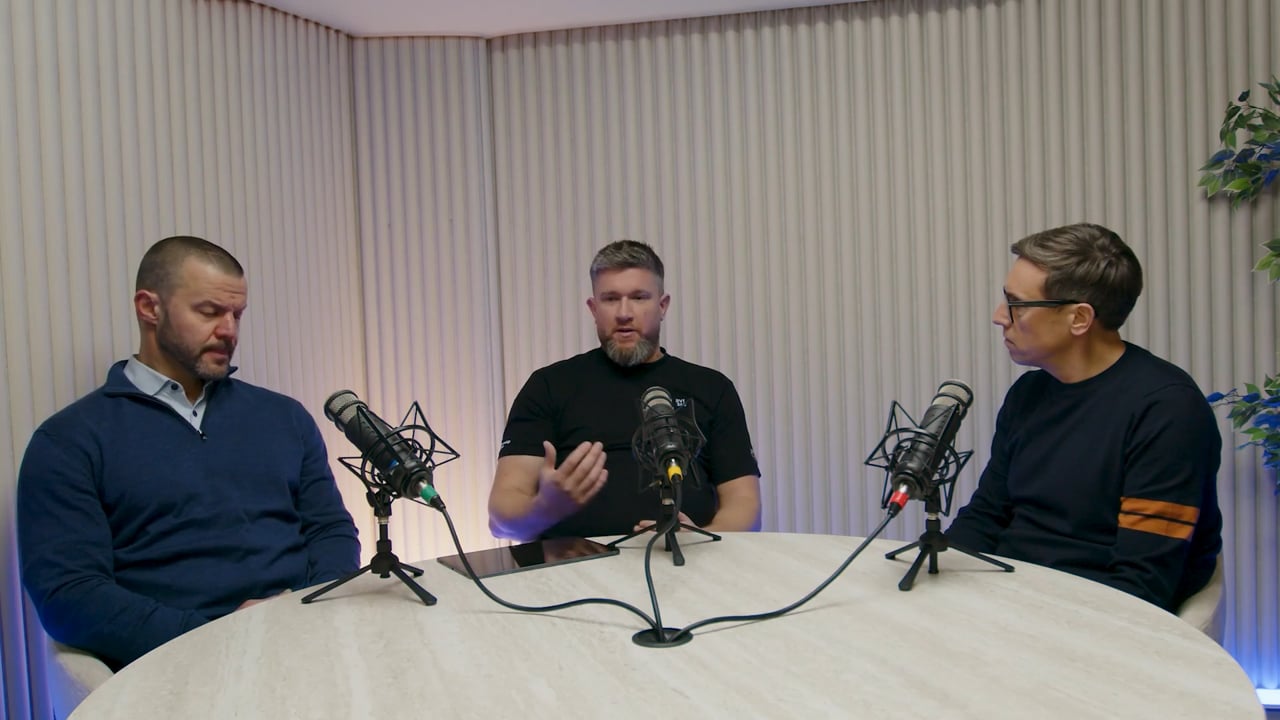
Work happens anywhere now. The kitchen table, the coffee shop, the train, out in the field. In the first episode of Talking Tracks, Paul Harris from Samsung UK asks Tom Owens and Ruarri Spurgeon what that really means for businesses and their technology. Tom explains why there's so much noise, and why the answer is usually to keep it simple. Ruarri looks at who's making technology decisions now. It's no longer just procurement and IT. Finance directors, MDs and HR are all in the room. The conversation ends where every good plan starts. Understanding where you are, so you can find a meaningful way forward for the next 12 to 24 months.
Key takeaways
- Work happens anywhere now, so devices, connectivity and security have to follow your people.
- Technology decisions now involve finance directors, MDs and HR, not just procurement and IT.
- The way through the noise is to keep it simple and start with what you actually need.
Chapters
On the mic
Host
Tom Owens
Co-Founder and Sales Director · RVT
Host
Ruarri Spurgeon
Co-Founder and Managing Director · RVT
Guest
Paul Harris
Account Director, Elite and Advanced Partners · Samsung UK
Read the transcript
Paul Harris Business mobility has changed and the technology that goes with it has changed as well. Since the COVID era, we've seen the changes in working practices from hybrid working all the way from one man bands all the way up to large multinational corporates. Today, we want to explore that with one of our key elite partners in RVT. And some of the things we're going to be discussing is specifically around where technology is today, how it's disrupted things, how it's improved things and where's it going next. Today, I'm joined by Tom Owens and Ruarri Spurgeon co-founders of RVT. Welcome.
Tom Owens and Ruarri Spurgeon Hello, Paul.
Paul Harris Good to see you both. So I think just on that theme, I think it'd be really good to get a first view from you both on exactly where we are today from a technology. Lots of different end points, lots of different ways of servicing those end points, AI, the evolution of working from hybrid, the work from home, hybrid working, et cetera. Tom, if you would just sort of sum it up in a couple of sentences, what do you think it means right now today for businesses and technology and how that mobility piece has changed?
Tom Owens Well, I think ever since the, maybe even predates COVID a little bit, but certainly post COVID, the working world has changed, right? It's almost unrecognisable before 2020 in terms of people's ability to work from anywhere. And that doesn't necessarily just mean home working and that means out in the field. I want to work from a coffee shop, I want to work from a train. Yeah, the working world has changed. And one of the challenges that a lot of businesses face obviously is ensuring that those organisations are as productive as they would be ordinarily, making sure they're secure and making sure that staff have got all of the tools and resources that they need to be able to perform their job effectively wherever they're based.
Paul Harris And I think one of the things you touch on there around security, many, many different people involved in those different decisions that has to be made for how those policies and remote working is actually out there and active. Do you, the conversations that you've been having with your own customers and the way you see in the market is there a lot of confusion from customers? Is it like they need some support and guidance in terms of how that gets buttoned down effectively?
Tom Owens 100%, there's an awful lot of noise, right? There's no end of products that customers can buy, whether it's hardware, whether it's software, whether it's services. And I think one of our job is to help customers navigate that landscape, right? And understand what are the things that they can do without over-complicating things all of the time, keep it simple, but that will give them a secure connected workforce that have got the right tools and devices in their hands to be able to perform their role.
Paul Harris I think it's, and that's a really good point, I think from our perspective at Samsung, we have a number of, we're fantastic innovators in terms of what we do, bring fantastic solutions, innovations to market from foldable devices as an example of a more recent example. But I think it's more around now from what we're seeing, the demand from customers is what that solution looks like. It's not just a really innovative device, it's the so what for business and everything that wraps around that. I think that's something that we've discussed in previous meetings with our customers and other conversations we've had that those are the kinds of things that are really important.
Ruarri, from your perspective, I think one of the things we've explored together in our partnership is the number of different decision makers and people involved in these conversations with end customer perspective in trying to understand what this technology, innovation and evolution actually means. Would you agree with that? And what sort of types of people are more getting involved than they were prior? Because I guess traditionally might be procurement and IT, but would you say there are more people getting involved in those decision-making processes now that evolution is out there in the market?
Ruarri Spurgeon I think when you talk about things like the modern workplace and digital transformation, the potential optimisation of performance means that it becomes a discussion for finance, sales, the opportunity to have the business run at a much greater pace and to develop at a much greater pace. It becomes central discussions about how the business is going to develop. So we're now having conversations with finance directors, MDs, even human resources. Whereas historically, like you say, it would have been simply a conversation for someone in procurement to explore what devices they needed and what the price was.
So the discussion, the conversation has changed completely.
Paul Harris So it's like really multifaceted and I guess that creates not so much confusion, but it just involves a lot more people as part of a decision-making process to get to a decision on a strategy or a process that they want to follow and adopt within their organisation, I guess.
Ruarri Spurgeon Well, we arrive, and certainly if we look into the next three years, if you think about the progress over the last one or two, we're now at a point where really anything is possible when we're talking about technology and businesses are thinking about how are we going to adapt and how are we going to change with the change in the whole world at the moment. So it's very confusing. There's a lot of components to that. There's strategic components to it. And I think our job at RVT is to try and simplify and provide our customers with the right information.
So it's not confusing. And give them the solutions that are going to provide value to them. Because like Tom said, a lot of it is noise, and it's easy to get distracted with lots of different ideas and what have you, lots of buzzwords. I mean, when we talk about AI, for example, I think the vast majority of our AI-related projects all over the world have failed so far because people don't know how to deploy it, what it's for, how to use it. So we need to be able to simplify those decisions and those conversations so that customers have got a meaningful way to move forward into the next 12, 24 months.
That's what's important to them.
Keep listening
RVT360 Discovery
Like what you're hearing?
Book a free 30 minute RVT360 Discovery.No obligation, no hard sell.